Showing posts sorted by relevance for query wilson. Sort by date Show all posts

October 20, 2009

One of these people is not like the others... Comparing period and modern violin[ist]s (Part 3)

During the last concert set, David Wilson asked his colleagues in the violin and viola sections of Philharmonia Baroque the most important question about the difference between the baroque violin and modern violin: not about construction, nor about how the instruments are held or played, but
what makes a period violinist:

"As far as I know, no one has yet begun their violinistic career as a baroque violinist. We are trained as modern violinists and at some point along the way we discover this other path and begin to pursue it (I sometimes call this ‘going over to the Dark Side’). Doing so requires an open-mindedness, a willingness to try new things and possibly to discard a great deal of habit. Making the switch involves a great deal of time, effort, and even expense on the part of a player.

"So, why bother? I asked that question of a number of my fellow musicians, and here are some of the answers I got:
Baroque instruments are ‘native speakers’ of the musical rhetoric of their time. In original ‘dialects,’ they enable musicians to delve into and to genuinely articulate the elegance, emotional power and humor in baroque music.

It is the subtle, sensuous responsiveness that always draws me to the baroque violin. While playing on gut and especially while using a baroque bow, I feel I have a greater range of musical color, a more fleet, capricious ability to show the ever-changing character and mood of the music.
— Katherine Kyme

‘the baroque violin’
or, as it was called in the 18th century
‘the modern violin’

we use baroque instruments as means for a shamanistic exploration of the ways of our ancestors
– as the hunter dances in imitation of the game, in order to become the game –
we bring the words of our ancestors to our lips via their writings
we look through their eyes into their paintings and drawings
we put our ancestors’ hands before our eyes via facsimiles
we grasp their tools in our hands via their instruments
and so we attempt to reenter their world
or invite their spirits into ours
and thus reanimate
their voices
in our ears

I am able to do much more nuanced playing with the baroque bow, and the lower tension on the strings allows me to draw out a singing tone without effort. My baroque instruments, geared for chamber music and small orchestras, are more personable, intimate, individually expressive... and the best thing is you don't have to constantly shake the note to make it sing!
— Maria Caswell

Every culture has created its own particular sound world; and none of them are the same, all are unique. I suspect that many of us who love Baroque instruments have some desire to visit the people of that lost world, a curiosity and love which is somewhat satisfied in the playing of ‘their’ instruments in a way ‘they’ might have recognized.
Of course, we couldn't couldn't post this blog without asking David the same question he posed to his colleagues: Why baroque violin, David?
The first time I ever heard baroque music on period instruments, I literally had chills running down my spine and tears running down my face—I was profoundly moved by the sound of the instruments and the way that sound showed the power of the music. For me it was like having heard poetry read by a voice synthesizer, and then hearing it read by a poet. I knew I wanted to learn how to make music in that way.
— David Wilson

July 7, 2009

"What I did on my summer vacation..."

Ever wonder what your favorite musicians do during the summer while PBO is on hiatus? Keep reading...

In June, PBO musicians William Skeen (pictured left, photo from the Orange County Register), Elizabeth Blumenstock, John Thiessen, Ondine Young, Jolianne von Einem and Rob Diggins performed at the Corona del Mar Baroque Music Festival in Southern California. Read more about the festival here, here and here.

While in SoCal, spouses Skeen and Young performed with Musica Angelica and Bach Collegium San Diego, as well as caught a few beaches, parks, and museums with their children, Talia, 6, and Liam, 3 (pictured below riding a carousel in San Diego). They are now traveling up the coast to Monterey for the Carmel Bach Festival, then onwards to Whidbey Island Music Festival, and back to the Bay Area in August to prepare for PBO’s concerts, as well as a San Francisco Early Music Society series with their baroque ensemble La Monica.


This month, Blumenstock (pictured left at the Corona del Mar festival) will teach at PBO cellist Phoebe Carrai’s International Baroque Institute at Longy in Cambridge, Massachusetts. In August, she will sneak a week of vacation before traveling to Drottningholm, Sweden, and Edinburgh, Scotland, to perform with the Internationale Händel-Festspiel Göttingen Orchestra, conducted by none other Nic McGegan. "It will be a blast to see the old Baroque theater and props in Drottningholm!" wrote Blumenstock in an email.

von Einem and her partner Diggins are busily organizing a new ensemble called Omnia Musica in preparations for a South East Asia tour in the spring of 2011. In conjunction with the Portland-based nonprofit FOLKWAYS INSTITUTE the ensemble will perform a mixed program of Baroque and Classical music and South Eastern Appalachian Mountain and Mississippi Delta music in Bhutan, Kathmandu, Kolkatta, New Delhi and Chennai.

In June, violinist and PBO staffer David Wilson (pictured left, photo by Lars Johannesson) traveled to Washington, DC to participate in a 5-day residency at the Smithsonian Institution with Lux Musica. The Santa Cruz-based ensemble collaborated with two musicians from Turkey, Neva Özgen, kemençe, and Murat Aydemir, tambur, to perform the music of Dimitrie Cantemir, who served both the Ottoman sultan and the Russian tsar at the turn of the 18th century. On the same trip, Wilson performed music of Henry Purcell and his contemporaries with Ensemble Vermillian at the Boston Early Music Festival.

Violist Maria Caswell lives in rural Sonoma County, so, during the summer, she spends most of her time outdoors, gardening and tending to animals. In the fall, the musicians will be plying her for jellies and jams (she cans applesauce, pears, peaches, nectarines, figs and any other fruit she can get her hands on). Her family recently vacationed at a cabin on Odell Lake in Oregon, spending most of the time boating (her daughter, Alena, is pictured below piloting the boat).


Have you gotten away this summer? Started a new project (musical or otherwise)? Let us know.

October 20, 2009

Libby visits the Fromm

Last Tuesday, period violinist Libby Wallfisch, who was in town to lead our October concerts, journeyed out into the rain to the Fromm Institute with David Wilson to speak at the weekly "Brown Bags" speaker series. Thank you Command Performances Representative Bob Morgan for having us! Here are a few photos from the day:

Libby talks about how her baroque violin is built differently than the modern ones that the "Frommies" are used to seeing played at the San Francisco Symphony.

Much like the wands of J.K. Rowling's imagining, rarely were two bows alike in the Baroque era, as every region had its preferred shape to fit the local playing styles and techniques, not to mention every bow craftsman had his own signature. Organizer Bob Morgan (left) looks on.

As you'll know from an earlier post, the baroque violin was played while held with the left hand and supported by the collarbone. This "chin-off" technique may seem odd to us now, but the violin began life as a street instrument. Libby demonstrates here how it was popular among Renaissance era fiddlers to hold the instrument at the "third rib" (she's miming an engraving that suggests that the fiddlers also found it fashionable to play with a pipe dangling between their lips, a tankard of ale on the table and a few buxom women on hand to... uh... woo).

March 2, 2010

Like the human voice...

Though Toronto indie rocker Charles Spearin's Happiness Project is one the most touching explorations of humanity through sound in recent memory, he is not exploring a new idea – musicians and composers have long tried to replicate the beauty of the human voice and patterns of speech instrumentally. In particular, bowed stringed instruments have always been admired for their ability to mimic the human voice.

In anticipation of our concerts this weekend and next, Philharmonia Baroque players David Wilson and Maria Caswell, as well as guest artist Jordi Savall, talk about the voice of early stringed orchestral instruments: Listen to our audio concert prelude.

September 9, 2009

More about the composer known for his wit

Joseph Haydn's death has oft been commemorated in the past, you may remember the old Goons skit:

Spike Milligan: "Here. In the piano"

PS "What the devil are you doing in there?"
SM: "I'm hidin'"

PS: "Don't be silly, Haydn's been dead for years."
SM: "Silence! I don't wish to know that!"

PS: "Neither do I."


David Wilson joins us again with a short biography of the Austrian composer who spent too much time in England and who probably would have found that skit funny:

Joseph Haydn was born in 1732 in the village of Rohrau, Austria, which is roughly between Vienna and Bratislava. When he was seven years old, Haydn was recruited to join the choir at St. Stephen’s cathedral in Vienna by the director, Georg Reutter. As a St. Stephen’s choirboy, he would have spent a great deal of time rehearsing and performing music, in addition to studying voice, harpsichord, and violin; this proved to the foundation of his musical education. Reutter encouraged him to improvise ornaments in the pieces he was performing and gave him suggestions about what worked and what didn’t, which led to the idea of composing pieces of his own.

Haydn had such a beautiful boy soprano voice that Reutter suggested that he be made a castrato—in other words, surgically castrated so that his high-pitched voice would be preserved as he matured. His father flatly refused to allow it, however, and when Haydn’s voice began to change he was dismissed from the choir. Haydn left with injured pride, but otherwise intact.

After leaving St. Stephen’s, he spent several years working as a teacher and free-lance musician in Vienna, and taking composition lessons with composer Nicola Porpora. In 1757 Haydn got his first regular job as a musician, as music director for Count Karl Joseph Franz Morzin. He wrote his first symphony when he was Morzin’s director. By 1761, he had been hired by the Esterházy court; the Esterházy family was rich and influential, and Haydn worked for them for almost 30 years.

Learn more about PBO's September concert set that commemorates the life and works of Haydn.

October 8, 2009

One of these things is not like the other... Comparing period and modern violins (Part 1)

Our October concert features period violinist Libby Wallfisch and, of course, the baroque violin. We asked violinist and PBO staff member David Wilson to help clue us in about the differences between the period violins you see played in our orchestra and the modern ones by our friends at the Symphony:

"The way that violins are made today are very different than when the instruments were made in the Baroque period (1600-1750 or so), but only a few of the differences can be seen right away. One of the first things that most people notice is that a baroque violin has no chinrest. Invented around 1810, the chinrest is a wooden device much like a shallow cup or bowl that allows a modern violinist to support the violin with the chin and shoulder. The baroque violin is held differently – with the left hand and the collarbone – so no chinrest is needed. Another thing many people notice is that the fingerboard (the piece of wood which runs under the strings) is shorter on a baroque violin than on a modern violin. You can see these differences clearly on the violins below, the baroque violin is on the left and the modern one on the right.

"If you were looking at these instruments in person, you might also notice that the strings are different: three of the four strings on the baroque violin are plain sheep’s gut and the G string (the lowest one) is made of silver wire wound around a core of sheep’s gut. On the modern violin, the lower three strings are made of metal wire wound around cores of either gut or an artificial material and the highest string is a plain strand of steel wire. The high E string also has a special fine-tuning device visible on the tailpiece (the piece of wood near the chinrest to which the strings are attached).

"More difficult to notice (but very significant) is the differences in the necks of the violins. On a baroque violin, the neck is attached to the body in the same plane as the body, and the fingerboard sits on a wedge of wood on top of the neck. On a modern violin, the neck is tipped back at an angle to the body, and the fingerboard is attached directly to the neck. You can see this below.

These are just a few differences in construction that give the baroque violin a warmer, richer sound than its bright-sounding grandchild."

In case you you were curious, Timothy G. Johnson built both of the above violins during the same time period from many of the same materials (note the similarities of the wood used for the body). We thank him for the use of these photos. The baroque violin belongs to the author and is a Stradivari model. It actually has two siblings in the PBO family – a violin played by Maxine Nemerovski and a cello played by David Goldblatt.

Learn more about our October set: "The Concerto – An Adversarial Friendship."


January 22, 2010

Meet Mr. Brahms

In yesterday's post, we said that we going to address why Philharmonia Baroque is expanding it's repertoire to play works from 1858 and 1878, some of the newest music we've ever played, but not quite. First, however, let's talk about the beloved Romantic composer of these works: Johannes Brahms. Violinist and Philharmonia Baroque staffer David Wilson joins us again:

When Johannes Brahms (pictured left) was born in 1833, his native city of Hamburg already had a musical tradition that was centuries old. Opera, church music and music publishing all thrived throughout the 17th and 18th centuries. The city also had a tradition of public concerts – something we take for granted today but was not a given throughout history. This was the environment into which Brahms was born. His family was working class, but valued music and education. Brahms went to school and had lessons on piano, cello and horn. As a teenager, he began to perform in public as a pianist and to write music.

At the age of 20, Brahms was meeting and playing music with many musicians who were or would become some of the foremost performers and composers of their time, including violinist Joseph Joachim, for whom Brahms would later write his only violin concerto, and Franz Liszt. Joachim told Brahms that he really should get to know the Schumanns, Robert and Clara, both of whom were composers. He did so in September of 1853 and a lifelong friendship between the three musicians began. Brahms spent the next ten years performing, composing chamber music and thinking about the creative process and how that relates to life.

In 1855, frustrated with composition to the point of writing that he no longer had any idea how one goes about composing music, he turned to early music – the counterpoint of Bach, for example, and to baroque and renaissance dance forms – as well as folk music for creative inspiration. It worked. (In our time, Estonian composer Arvo Pärt reached a similar creative impasse and, like Brahms, he resolved it through a study and application of the principles of early music.) Brahms’s interest in early music was also reflected in the repertoire he chose for the choirs and orchestras he conducted in Hamburg and Vienna, as well as the repertoire he performed in his piano recitals. In 1850, the Bach-Gesellschaft (Bach Society) was formed in Germany to publish the complete works of J.S. Bach. Brahms owned a number of volumes (cantatas) of that complete-works edition and may even have been a subscriber of the Society.

In 1869, the first full performance of his German Requiem was greeted so enthusiastically that Brahms finally became known as an important composer throughout Europe. Despite a disastrous stock market collapse in 1873 that trashed the economies of most European countries (and that of the U.S.), Brahms’s own fortunes soared in the 1870s in the form of concert tours, guest conducting engagements throughout Europe, awards and knighthoods, publishing contracts and teaching engagements. He continued to compose in many genres, including large works involving orchestra.

Brahms died of liver cancer on April 3, 1897. Although he was romantically linked to a number of women during his lifetime, he never married.


December 7, 2009

Learning French... Baroque String Techniques

Remember when David Wilson wrote about a how baroque violins were different from modern violins generally. Well, one of the fascinating things about Baroque music (to us anyways) is not just how different instrument construction, playing technique and musical styles were from then to now (or even just when compared to the Classical era), but also the variations from region to region during the Baroque era. In the most recent issue of All Things Strings (based in Marin County!), the article "Master Class: 5 Tips on Approaching French Baroque Music" gives strings players tips about how to approach French Baroque music in a historically informed way. Now, we won't be playing French-style Baroque music until March, but you can read the article here. The more you know...


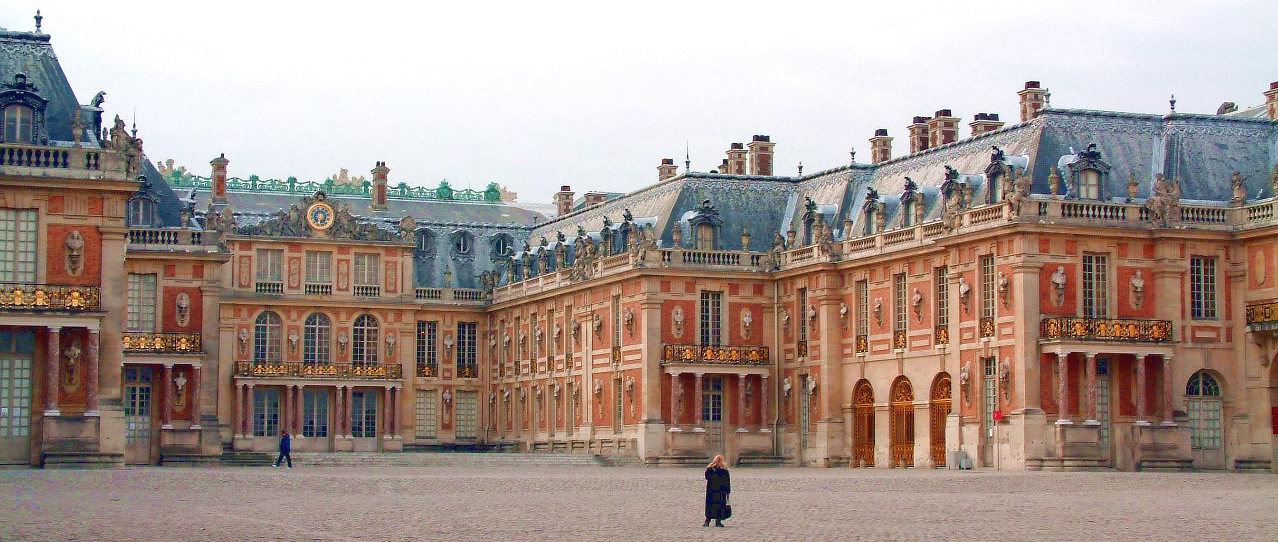
Formerly a hunting shack, Louis XIV's Palace of Versailles (a non-musical masterpiece of the Baroque era in France)

September 29, 2009

Learn more about our October concerts

"The Concerto — An Adversarial Friendship," Philharmonia Baroque Orchestra's second concert of its 2009-10 "Season of the Stars," is less than two weeks away! Period violinist Elizabeth Wallfisch (pictured left) will be leading our orchestra in a program of Baroque pieces both familiar and "new." San Francisco Classical Voice previewed the concert in today's enewsletter:
"Amid the glamour and glitz of Philharmonia Baroque Orchestra’s’s 2009-2010 season, the ensemble’s October concert set “The Concerto: An Adversarial Friendship” may draw more headlines for its guest leader (the dynamic violinist Elizabeth Wallfisch) than its repertory, comprising mostly less-familiar German figures (Muffat, Biber, Schmelzer). But dig deeper into the program, performed Oct. 9-17 in various Bay Area locales, and you’ll find some flashy selections and intriguing backstories to this highly engaging repertory." Read more of Joseph Sargent's preview.
To learn more about this concert, click the links below:


You can also listen to movements of works by Muffat and Schmelzer on October's concert page. Hint: when you click on "Learn more about these recordings," you can read about these works!

An don't forget: 45-minutes before every concert we offer free lectures to our ticket holders.

January 7, 2010

The Story of "A:" More about Baroque pitch

Since the title of our blog is A-415, we felt that one of our first blog posts of the new year should again address the issue of pitch, especially since this will be a major part of Nic's upcoming posts about our February concerts. David Wilson joins us once more to explain (he also warns that your geek alarms may sound...):

Baroque oboe legend
Bruce Haynes has researched the issue of historical pitches in detail. I suggest reading his book The Story of “A if this post interests you. Bruce points out that we talk about pitch levels by means of two coordinates, a pitch name and a frequency in hertz, e.g. “A-415.” For about the last century, the standard pitch level has been A-440, meaning that, wherever you go in the world, Western classical music is likely to be played at a pitch level in which the note A in the middle of the treble staff is tuned to 440 hz. (Editors note: a hertz is a unit of frequency – one cycle per second – that measures, in this case, the traveling wave or oscillation of pressure caused by vibrations that we discern as sound). Having a pitch standard is a convenience for musicians, nothing more.

Prior to the late 19th century, however, there were no universally recognized pitch standards. One could travel from one part of Europe or, in some cases, from one city to another and find music being made at different pitches. For a string player, this in no problem – the string can be tuned to any pitch (within reason) – but for a fixed-pitch instrument, like a flute or an oboe, this can be a huge problem. It might mean that if you were an oboist, you could play in tune with a violin band but not with the church organ, or you could form your own band with your friend with a recorder made in your village but not with your friend with a recorder from the next town over.

In the Baroque Era, pitch levels as high as A-465 (17th century Venice) and as low as A-392 (18th century France) are known to have existed. A few generalizations can be made:
  • pitch was high in North Germany and lower in South Germany
  • pitch was low in Rome but high in Venice
  • pitch in France depended on whether you were playing chamber music, opera or something else.
Pitch levels in the Renaissance and Middle Ages were similarly varied according to location and historical period. By the Classical period there was more interest in standardized pitch levels, again as a matter of convenience for traveling musicians.

One of the pitches used during the baroque period was A-415. Since 415 hz. is about a half-step below the modern standard of A-440, the pitch of A-415 was seized on as a convenient modern “baroque pitch” standard, because in the early days of the historical performance movement a harpsichord would sometimes play with groups at A-440 and sometimes at a lower pitch, and if the difference in pitch is a half-step, the keyboard could be made so that it slides over one string so that the A key played a string tuned to 440 hz. in one position and a string tuned to 415 hz. in the other position.

“So when you play baroque music, you tune to a G-sharp,” some people say at this point. Not so! We tune to an A, but we define the A differently depending on what kind of music we’re going to play. A baroque violinist may carry 4 different tuning forks (or one handy iPhone app), and a baroque flutist probably owns two or three different flutes at different pitches.

September 14, 2009

Things we are thankful for: Haydn's string quartets

David Wilson joins us again to explain why Haydn is so important to so many of our musicians:

Musicians have been known to describe playing chamber music as “The most fun you can have with your clothes on.” Read on to find out why.

Chamber music is a collaborative effort. A collaborative approach isn’t terribly practical when there are even as few as 25 or 30 players involved. In its earliest days, Philharmonia Baroque Orchestra was a conductorless, collaborative entity, and PBO players who remember those days observe that while the process of arriving at musical consensus in an orchestral context was musically formative for them, it was definitely NOT an efficient way to prepare for a concert. But collaboration is at the root of what makes playing chamber music so much fun. The process of discussing how a phrase should be shaped, of trying out different ideas and weighing their merits, even the sometimes-heated musical arguments among highly experienced and highly opinionated musicians, are in the end intensely satisfying.

Many musicians see the string quartet as the ideal chamber ensemble: four players make a very manageable yet extremely versatile combination, and four instruments in the same “family” have a great deal of built-in compatibility. Despite the fact that Haydn quartets are chronologically at the very beginning of the string quartet repertoire, they are among the most musically fascinating quartets to rehearse and perform. Perfectly crafted in terms of form and balance, they’re also charming, accessible, witty, profound, technically demanding, and above all conversational. In short, they’re everything that a chamber musician lives for. No wonder at all that Haydn quartets are adored by players and audiences alike.

October 9, 2009

One of these things is not played like the other... Comparing period and modern violins (Part 2)

Now that we have some idea how a baroque violin is built differently than a modern one, we've asked David Wilson to explain the differences between playing period violins and modern violins:

"What makes a baroque violinist? Having period-appropriate equipment (violin and bow) is the beginning, but playing the baroque violin also calls for very different techniques than the modern violin.

"While watching the violin sections of Philharmonia Baroque Orchestra perform, the first thing you might notice is that the baroque violin is held differently. The end of the violin rests on the player’s collarbone at one end and is supported by the player’s left hand at the other, rather than being held between the chin and the shoulder like a modern violin. The result is that the player’s head is free to assume a natural, relaxed position while playing."

Click to watch a video in which you can see how period violinists hold their instruments (you may recognize all of the musicians, they all perform with PBO!). Compare this to how modern violin teacher and professor Todd Ehle instructs his virtual students how to hold their instruments.

"The leader and soloist for PBO’s October concert set, violinist Elizabeth Wallfisch, is one of the leading proponents of the 'chin-off' approach to baroque violin playing, in which the player’s head never touches the violin. All changes of left-hand position are accomplished by means of a graceful ballet of sliding and pivoting.

"Another important difference lies in the way energy is transferred through the bow and onto the strings. Modern technique (using a modern bow) involves (to a certain extent) a 'levering' motion with the wrist and fingers of the right hand to press the hair of the bow against the strings. To do this ergonomically, the right elbow is characteristically held at about the same height as the wrist. In contrast, a baroque violinist thinks more about using gravity to transfer the weight of the right arm through the bow and onto the string. As a result, again for ergonomic reasons, baroque violinists tend to play with the right elbow noticeably lower than the right wrist."

Click here to listen to period violinist Rachel Podger explain some more of the differences between playing period and modern violins.

September 9, 2009

Gone but not forgotten: Commemorating Haydn

PBO staffer and musician David Wilson guest blogs this week. Here is the first installment of three blogs about Franz Joseph Haydn:


The year 2009 marks the 200th anniversary of the death of Joseph Haydn (1732-1809). A much-loved and highly influential composer, Haydn was born in the Baroque period, wrote primarily in a Classical style, and ultimately helped point the way to Romanticism.

Haydn biographer James Webster writes, “Haydn’s character was marked by a duality between earnestness and humour,” and the same can be said of his music. He was fortunate enough to have a job which allowed him to be musically innovative and to experiment without having to worry about getting bad reviews or getting fired, to indulge his imagination and his moods in his music. He is called the “father of the symphony,” and while this nickname is not entirely accurate, his 106 symphonic works are musically brilliant and did a great deal to define the genre. It would be more accurate to call Haydn “the father of the string quartet,” a genre he pioneered and which became a cornerstone of chamber music writing.

Webster writes, “Haydn’s public life exemplified the Enlightenment ideal of the honnête homme: the man whose good character and worldly success enable and justify each other.” Although he is often remembered for his clever and witty music, Haydn’s goal was to move the listener, and his music is as often profound as it is witty. An audience member at the first performance of his oratorio The Creation wrote, “In that moment when Light broke forth for the first time, one would have said that light-rays darted from the composer’s blazing eyes. The enchantment of the electrified Viennese was so profound that the performers could not proceed for some minutes.”


March 11, 2010

Size matters: About the length of natural horns

Recently, we've been asked more than once about our natural horns. So we have asked David Wilson to answer the below. (He adds the caveat: "I will answer the question as best I can, but I'm a violinist, not a brass player"):

My wife and I greatly enjoyed the early French-Handel-Telemann concert last night. We were intrigued by the two-foot-long trumpets and the extra curly horns. I opined that maybe the extra pipe functioned much as today's brass mutes do, softening the sound and helping it to combine with other instruments. (But I'm willing to be proven wrong.) Your explication, please?


Ensembles like Philharmonia Baroque, which play early music on period instruments (i.e. instruments like the ones used in the period in question, the 17th and 18th centuries in our case), use trumpets and horns without valves. For these "natural" instruments, the length of the instrument (that is, the length of brass tubing) determines the fundamental pitch of the instrument and, by adjusting the tension of the lips, the player can produce the notes in the harmonic overtone series of that fundamental pitch.

For example, if a horn is tuned in D, that means it's a long tube of brass coiled up that's the right length to sound with the note D at a given pitch (like A-415). It's the same principle on which organ pipes are made – the pitch is determined by the length of the pipe. So if a horn is in D, it can play the notes in the harmonic series of D: D, A, D, F-sharp, A, C, D, E, F-sharp, G-sharp, A--that's probably about it. Those notes are great if you're playing in a key that uses those notes, but, if you're playing in a key that uses other notes, you need to start with a length of tube that produces a fundamental note whose harmonic series that contains the notes you need.

One way of having a different length of tube (that is, a different length of horn) is to keep lots of differently-sized horns around, which is expensive and inefficient. What players do is use interchangable "crooks" or removable inner sections on the horn. If you need a horn in C, for example, you need a longer tube than you would for a horn in D (since C is a whole-step lower), so you put in a crook that's exactly that much longer, and voila! your horn is in C. The notes of the C harmonic series are now available to you. You can even change keys by changing crooks in the middle of a piece (as long as the composer writes enough rests for you to remove one crook and put in another).

In the 19th century, instrument makers started experimenting with keys and valves which would allow the player to have an instrument that was the maximum length he would ever need, but would allow him to artificially shorten the length of tubing by diverting the airflow by means of opening or closing valves.
Bernard D. Sherman writes in the recent article in Early Music America Magazine:
Inventors first applied valves to the horn in 1814, yet the results still sounded “intolerable” in the 1820s to the foremost composer for the instrument, Carl Maria von Weber. In the 1830s, when Brahms was born, a Viennese inventor patented an essentially modern valve, and the Parisian composer Jacques Halévy published the first orchestral parts conceived purely for valved horns. They were to be played alongside the old and tellingly named natural horns. Such hybrid scoring continued in the 1840s, with examples from Robert Schumann and Richard Wagner.
So the curlicues of tubing you saw on Philharmonia's brass instruments aren't intended to mellow the sound. You're right, in the sense, that the older, non-valved horns had a more pleasant and mellow sound than their valved descendants – that's why there was so much resistance to valves by some players and composers in the 19th century. Brahms is a prime example of a composer who much preferred the sound of natural brass to valved brass.

December 4, 2009

Composer Warbucks: Vivaldi and the Ospedale della Pietà

Pio Ospedale della Pietà? Again and again the name of this Italian girls' orphanage and school comes up when reading about the composer Antonio Vivaldi, why? The obvious reason is because Vivaldi worked there for over two decades! Another reason is because the Piéta had one of the finest orchestras in Europe and Vivaldi wrote much of his music for the orphans. David Wilson tells us more:

The Pio Ospedale della Pietà in Venice (image below), usually described as an orphanage and music school, was extremely important in Antonio Vivaldi’s life. At the age of 25, Vivaldi was hired by the Pietà as a violin teacher. It was his first “real” job, and his association with the Pietà continued in one form or another for the rest of his life. A great deal of Vivaldi’s music was written for concerts and religious services at the Pietà.

In 1198, Pope Innocent III decreed that homes should be established which would care for orphans and children who had been abandoned. These homes were generally associated with churches and convents. By means of a “baby hatch” or “foundling wheel” (image below), a mother could anonymously deliver a baby, usually a newborn, into the care of the church. The mother would place the baby in a sort of revolving door, rotate the device so that the baby was inside, and then ring a bell to alert those inside that a baby had been delivered. Sometimes babies were abandoned because of a deformity, but more often it was because they had been born out of wedlock.


The Ospedale della Pietà was one of four such homes in the city of Venice. The Pietà took in mostly girls, and by Vivaldi’s time had become well known for the quality of the musical education provided to its residents. The girls of the Pietà became such accomplished musicians that by Vivaldi’s time the institution had developed a reputation as a first-rate music school. In fact, noble families with musically talented daughters would often try to pretend that the girls were orphans in order to enroll them at the Pietà, a practice that was sternly disapproved of by the institution as it was intended to be a charitable organization.

In fact, as Robert Mealy wrote in last season’s program notes for March 2009’s “Winds and Waves” concerts: the young women had to renounce any professional career once they left the institution.

“These terms meant that there were a good number of women who stayed on in the Pietà, becoming teachers. This all-woman orchestra was enough of a novelty (and their playing was of such exceptional ability) that their performances became one of the attractions of Venice, a standard stop on the Grand Tour of young, well-to-do gentlemen, who delighted in the mystery of hearing these women play behind a “grille” or screen.”