Check them out:
We've been Fall Arts Previewed!
September Program Notes
Videos: Levin on Mozart
What I did on my summer vacation, pt. 1
Thank you for following this blog. Please keep up with us on facebook and our new website.
Showing posts with label Concerts. Show all posts
Showing posts with label Concerts. Show all posts
August 27, 2010


July 15, 2010
FREE-harmonia Baroque Orchestra...

Don't miss a FREE performance by a small ensemble of musicians from the orchestra. On Sunday, September 26, at 5 p.m. the Philharmonia Baroque Orchestra Ensemble performs at Hertz Hall on the UC Berkeley Campus. Part of the Cal Performances Open House "Free For All," the ensemble performs Haydn's Quartet for Oboe and Strings in C major and String Quartet in E-flat major, Op. 64, No. 6, as well as Mozart's Quintet for Oboe and Strings in C minor. The event is free and open to the public. This will be the perfect way to warm up for our all-Mozart concert with fortepianist Robert Levin later that evening.
TRIVIA: Austrian composers Haydn and Mozart were contemporaries – though there was a substantial age difference (Haydn being 24 years older than Mozart). Were the two friends? Find out here.
Hint: The above engraving is supposed to be a portrait of Mozart & Hadyn in Mozarteum, Salzburg.
July 7, 2010
Kick off the year with Intrada

Wines are provided by board member Randall Grahm, founder and owner of Bonny Doon Vineyard.
Tickets are $85 per person (event only) or $110 per person (includes balcony seating for the concert performance in Herbst Hall). Purchase tickets now using PalPal:
Or contact Jeff Thomas, Associate Director of Development, (415) 252-1288 x312.
If you're wondering what an "intrada" is, we'll quote our Grove for you: "an instrumental piece used to accompany an entrance, to inaugurate some festive event or to begin a suite [of dance music]" that was very popular in the Baroque era. What a great name for our 30th Season kick off party!
June 4, 2010
Frederica von Stade interview from Houston PBS
Tired of reading some pretty gloomy posts on "Orchestra R/Evolution," we decided to cheer ourselves up. And Flicka can certainly do that! Here's a clip from Ernie Manouse's interview with her for Houston PBS's InnerVIEWS from this past December:
May 19, 2010
Musicianship, sensitivity, dramatic flair... grace, elegance, personal warmth
 Joining us in March of 2011, Flicka has begun touring the country to say farewell to her adoring audiences before retirement. In case you missed it, here is the article about her Carnegie Hall farewell.
Glorious sounds of centuries past

On June 10-12, come say hello to us at our table at "BFX TEN" – the 10th bi-annual early music festival, conference and exhibition in Berkeley.
Presented by San Francisco Early Music Society and Early Music America, there will be beautiful performances both as a part of the festival and on "The Fringe" in conjunction with the main stage events. Don't miss members of the orchestra perform in their smaller chamber groups – Magnificat, Music’s Re-creation, Voices of Music, New Esterhazy Quartet, Harmonia Felice, Ensemble Vermillian, Les Violettes, Galax Quartet, Barefoot Chamber Concerts and many more. Click here for the full schedule of events.
April 28, 2010
Great photos from our March Concert with Jordi Savall!
 Until last week, we didn't know that our friend Frank Wing stopped by in March to snap photos of Jordi working with the orchestra during rehearsal. Check them out.
An influential afterlife: Exploring Orlando Furioso Part 3
Michael Wyatt joins us for the final post on Orlando furioso (read Parts 1 & 2):
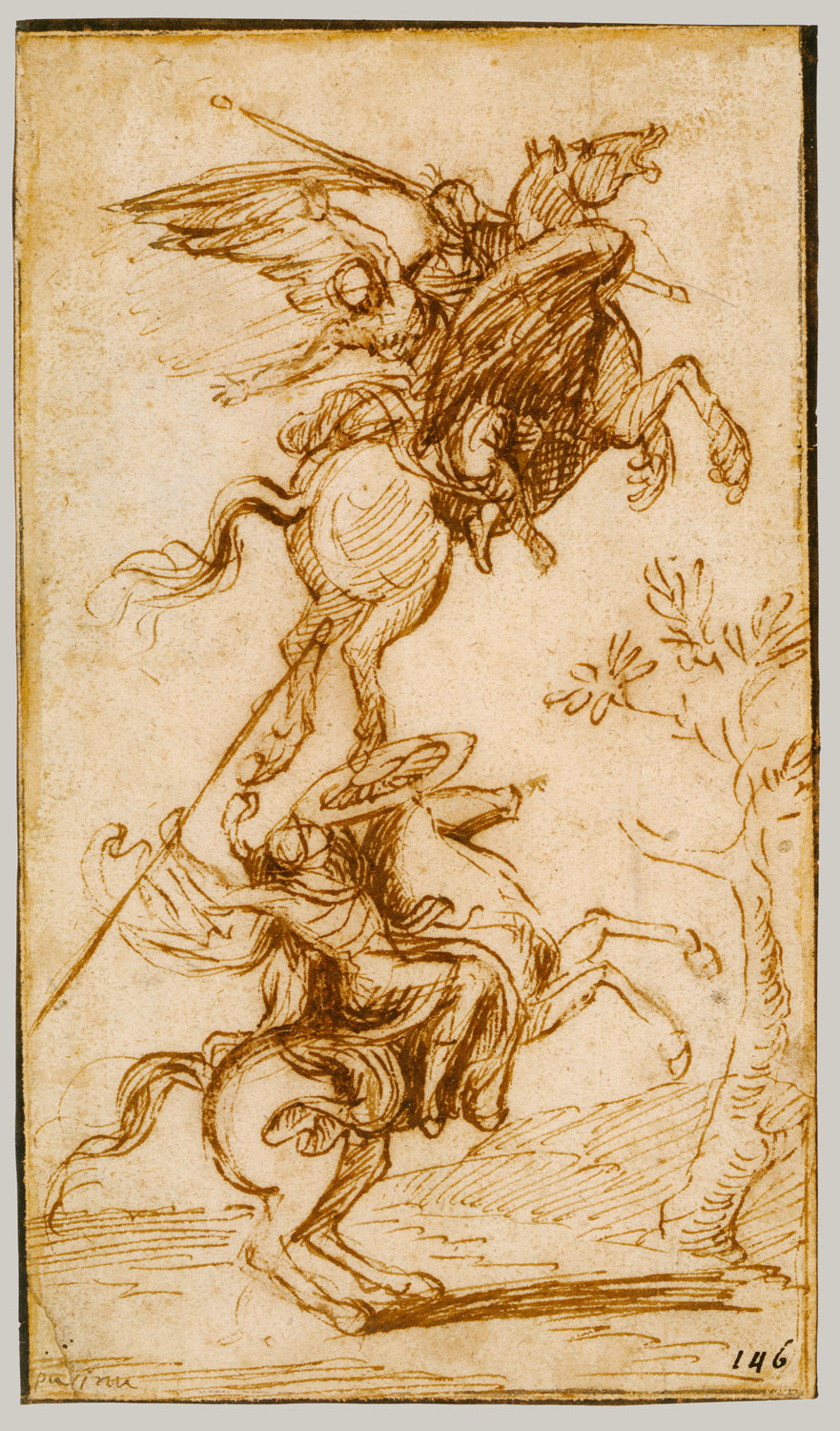

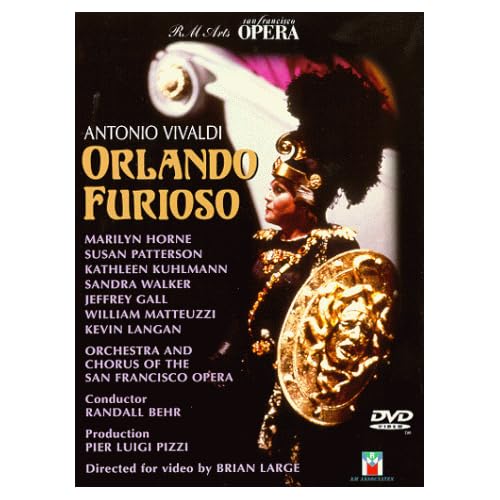
A mere summary does little justice to the dazzling linguistic and conceptual texture of Ariosto’s great poem, elaborated in almost 40,000 lines through a complex network of narrative threads and a cast of thousands.
"The Sorcerer Altante Abducting Pinabello's Lady" by Nicolas Poussin (French, 1594–1665)
Orlando furioso was one of the run-away publishing successes of the early modern period. The poem appeared in almost fifty separate editions in Italian in the sixteenth and seventeenth centuries (many of them reprinted many times over), but the Furioso has exercised an equally strong attraction translated into foreign languages. By the early twentieth century, there had been almost ninety versions – partial and complete – in French, twenty-nine in Spanish (it is one of the few books Don Quixote saves from his bonfire of the vanities), some twenty in Russian, thirty in German and eighteen in English. There have been translations of Orlando furioso into Czech, Latin, Hungarian, Portuguese, Dutch, Polish and Hebrew; the first Asian translation seems to be the one published in Japanese in 2002.
En Espanol!
Ariosto’s poem has had an equally rich history of re-elaboration in other forms, giving rise to a veritable industry of literary imitations and responses, visual representations and adaptations for the theater, film, television and radio. Handel wrote three operas to libretti based on the Furioso – Alcina, Ariodante, and Orlando – and composers as varied as Francesca Caccini, Lully, Porpora, Vivaldi, Rameau, and Haydn have found in Ariosto a deep vein of inspiration. Ariosto’s enduring fascination is evident today in the chivalric repertory of the Sicilian puppet theater, the opera dei pupi, a tradition that emerged on the island in the early nineteenth century and continues to be practiced today by several companies in Catania and Palermo.
April 19, 2010
Seven Centuries of Tradition: Exploring Orlando Furioso Part 2
While our April concerts are over (read the reviews), we are not done with Orlando just yet. Michael Wyatt joins us again:

Orlando furioso is the continuation of an earlier, unfinished, epic poem, Orlando innamorato (Orlando in Love), written in the late fifteenth century by another Ferrarese courtier, Matteo Maria Boiardo, both texts drawn from a wild mix of popular tales and cultivated literature that had developed over almost seven centuries in several linguistic and cultural traditions, encompassing both the Arthurian legends of Britain and the stories which had grown up around the figure of Hrolandus (Roland in French, Orlando in Italian), an obscure eighth-century French warrior.

The principal narrative axes of Ariosto’s poem are two. In the first, Orlando – chief among the Emperor Charlemagne’s Christian knights in the fight against the Saracen Agramante, King of Africa – is rejected by Angelica, daughter of the King of Cathay (China), goes mad, and in the process all but loses France to invading Islamic forces. Orlando’s tortuous return to sanity is only achieved late in the poem, after his English cousin and comrade-in-arms, Astolfo, travels to the moon where the wits of the insane are preserved in jars, watched over there by St. John the Evangelist. The second narrative crux concerns the ever-frustrated love of Ruggiero – Saracen champion and Orlando’s nemesis – for the Christian lady-warrior Bradamante, and the apparently countless impediments blocking their destiny – foretold early in the poem by the magician Merlin – to establish the Este dynasty.

The poem thus links the medieval struggle of Christians and Muslims, refracted through a complex web of history and mythology, with the contemporary reality of early sixteenth-century Italy, itself suffering at the time from a devastating succession of foreign incursions.
Prints by Gustave Dore.
April 8, 2010
Written in his spare time: Exploring Orlando Furioso Part 1
In our last blog post, we mentioned Stanford University's symposium "Mad Orlando's Legacy," which will explore the immense impact of the epic poem Orlando furioso by Ludovico Ariosto, which also happens to be the source material for our April concerts featuring Handel's Orlando. To help us explore the connection between the Renaissance poem and the baroque opera, Michael Wyatt (Associate Director of the Center for Medieval and Early Modern Studies at Stanford University) joins us for a three part blog post. His first is about the author of this epic poem with it's own epic story:

Though now recognized as one of the towering figures of Italian Renaissance culture, Ludovico Ariosto (1474-1533) spent his working life in the service of the Este lords of Ferrara. This city, north of Bologna, is now a sleepy university town but in the early modern period was at the cross-roads of a vast European struggle to gain control of the Italian peninsula, and Ariosto’s great epic poem, Orlando furioso (Mad Orlando), registers these conflicts in multiple ways.
Ariosto was born into a minor aristocratic family and studied both law and classical literature, but the premature death of his father exposed the precariousness of the family’s financial situation and compelled Ludovico into the role of bread-winner for a large clan, first as a diplomat, then as the governor of Este-controlled territories in the isolated mountainous region of the Garfagnana (to the north and east of Lucca), and finally back in Ferrara as master of ceremonies and entertainments for the Este court.
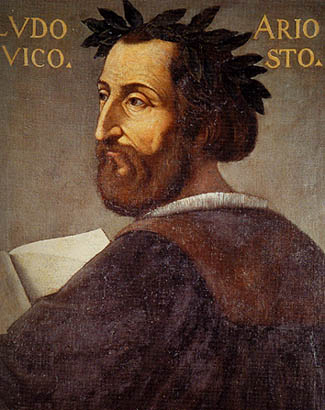
As with so many other major Renaissance writers, Ariosto’s extraordinary literary work was accomplished amidst other – frequently onerous – responsibilities, and Orlando furioso slowly took shape over the course of three decades. First published in 1516, Ariosto continued tinkering with his poem and brought out expanded versions of it in 1521 and 1532. In addition to the Furioso, Ariosto wrote other poetry – in both Italian and Latin – and he was among the first to write stage comedies in a European vernacular language. A series of Satires provide biting send-ups of some of the most prominent figures in Ariosto’s world (including the reigning pope, Leo X, or Giovanni de’ Medici).
March 30, 2010
Forever mad: The Legacy of Orlando Furioso
38,736 lines of poetry collected into 46 cantos make up one of Western culture's most influential works of literature – Ludovico Ariosto's epic poem Orlando Furioso. Written and rewritten over the course of 26 years, this masterpiece once inspired operas, plays, poems, novels, art work and, of course, plenty of copy cats. Ariosta's work "of loves and ladies, knights and arms... of courtesies, and many a daring feat" was actually a sequel of Matteo Maria Boiardo's unfinished romance Orlando Innamorato, which fused the French legends Charlemagne with the English legends of King Arthur.

Until recently though, many in our office hadn't even heard of the poem, the source material, for Handel's opera Orlando (and a couple others too). Well, thank goodness for us (and you), Stanford University's Center for Medieval and Early Modern Studies is hosting a symposium this spring about this poem and its legacy, which includes a conversation with Nic about Handel's Orlando and a performance by the Sicilian puppet company Figli d'Arte Cuticchio. Learn more.
March 19, 2010
Into the crazy world of Orlando: From our Handel expert (and Music Director) Nic McGegan
Nicholas McGegan joins us again to let us know what's so special about George Frideric Handel's opera Orlando, which the orchestra and chorale will perform in April:

Pictured above is the autographed score of Orlando, one of a series of so-called magic operas by Handel. While the sources of many of his plots are derived from classical history or mythology, the 1733 opera Orlando (as well as Ariodante and Alcina, both of 1735) is based on an Italian epic poem from the Renaissance – Orlando furioso by Ludovico Ariosto. Its story is one of extravagant valour and passion taken to the point of madness. Indeed, one could say that works in this genre were parodied by Cervantes in Don Quixote.

Extravagance, passion and madness are, of course, the life blood of opera and it is clear that Handel was inspired by the subject to produce one of his finest works. This is the last opera he wrote for the great alto castrato Senesino (left) for whom he had composed operas for a dozen years. Senesino was a difficult character but a superb singer and, unlike Farinelli, a splendid actor. This must have been a perfect role for him. The Mad Scene that forms the climax to the Second Act is one of the moments of Baroque Opera. Gone are all the normal conventions of the genre, even normal rhythms go awry as Orlando descends (in his own deluded mind) into Hell in five/eight time.
Into this crazy world, Handel, or rather his librettist, introduces two characters who are not found in Ariosto’s original. One is the magus Zoroastro who watches over the mad Orlando and eventually cures him of his insane love for Angelica. He is a wise father figure who will reappear in the Magic Flute as Sarastro. The other is the shepherdess Dorinda who represents an ordinary ‘down to earth girl’ mixed up in the rarified world of chivalrous romance. Her reactions are sometimes comic but she is also emotionally hurt by the crazy grandees about her, who use her and occasionally abuse her. However, she is the contact between us, the audience, and the other characters. This role was created for Celeste Gismondi, a Neapolitan comedienne, newly arrived in London. Obviously, she was an excellent singer and pert actress. It is with her character that we most often sympathise.
Handel’s music is of the highest level throughout and, because of the story, he was inspired to experiment with glorious results. Apart from the famous Mad Scene, the Trio at the end of the First Act is one of the finest ensembles he ever wrote and the aria during which Orlando finally collapses would not be out of place in a Bach Passion.
.jpg) All this emotional extravagance was matched on stage by new scenery and costumes (like pictured left) specially made for the production. This was unusual at the time and was even noted in the newspapers. In addition, there were flying machines, including a chariot drawn by dragons to take Orlando out of Hell. We are, of course, giving the work in concert, so the audience will have to imagine the magic world on stage that went hand in hand with Handel’s glorious music.
All this emotional extravagance was matched on stage by new scenery and costumes (like pictured left) specially made for the production. This was unusual at the time and was even noted in the newspapers. In addition, there were flying machines, including a chariot drawn by dragons to take Orlando out of Hell. We are, of course, giving the work in concert, so the audience will have to imagine the magic world on stage that went hand in hand with Handel’s glorious music. March 11, 2010
Size matters: About the length of natural horns
Recently, we've been asked more than once about our natural horns. So we have asked David Wilson to answer the below. (He adds the caveat: "I will answer the question as best I can, but I'm a violinist, not a brass player"):
My wife and I greatly enjoyed the early French-Handel-Telemann concert last night. We were intrigued by the two-foot-long trumpets and the extra curly horns. I opined that maybe the extra pipe functioned much as today's brass mutes do, softening the sound and helping it to combine with other instruments. (But I'm willing to be proven wrong.) Your explication, please?
 Ensembles like Philharmonia Baroque, which play early music on period instruments (i.e. instruments like the ones used in the period in question, the 17th and 18th centuries in our case), use trumpets and horns without valves. For these "natural" instruments, the length of the instrument (that is, the length of brass tubing) determines the fundamental pitch of the instrument and, by adjusting the tension of the lips, the player can produce the notes in the harmonic overtone series of that fundamental pitch.
In the 19th century, instrument makers started experimenting with keys and valves which would allow the player to have an instrument that was the maximum length he would ever need, but would allow him to artificially shorten the length of tubing by diverting the airflow by means of opening or closing valves. Bernard D. Sherman writes in the recent article in Early Music America Magazine:
My wife and I greatly enjoyed the early French-Handel-Telemann concert last night. We were intrigued by the two-foot-long trumpets and the extra curly horns. I opined that maybe the extra pipe functioned much as today's brass mutes do, softening the sound and helping it to combine with other instruments. (But I'm willing to be proven wrong.) Your explication, please?
 Ensembles like Philharmonia Baroque, which play early music on period instruments (i.e. instruments like the ones used in the period in question, the 17th and 18th centuries in our case), use trumpets and horns without valves. For these "natural" instruments, the length of the instrument (that is, the length of brass tubing) determines the fundamental pitch of the instrument and, by adjusting the tension of the lips, the player can produce the notes in the harmonic overtone series of that fundamental pitch.
For example, if a horn is tuned in D, that means it's a long tube of brass coiled up that's the right length to sound with the note D at a given pitch (like A-415). It's the same principle on which organ pipes are made – the pitch is determined by the length of the pipe. So if a horn is in D, it can play the notes in the harmonic series of D: D, A, D, F-sharp, A, C, D, E, F-sharp, G-sharp, A--that's probably about it. Those notes are great if you're playing in a key that uses those notes, but, if you're playing in a key that uses other notes, you need to start with a length of tube that produces a fundamental note whose harmonic series that contains the notes you need.
One way of having a different length of tube (that is, a different length of horn) is to keep lots of differently-sized horns around, which is expensive and inefficient. What players do is use interchangable "crooks" or removable inner sections on the horn. If you need a horn in C, for example, you need a longer tube than you would for a horn in D (since C is a whole-step lower), so you put in a crook that's exactly that much longer, and voila! your horn is in C. The notes of the C harmonic series are now available to you. You can even change keys by changing crooks in the middle of a piece (as long as the composer writes enough rests for you to remove one crook and put in another).
In the 19th century, instrument makers started experimenting with keys and valves which would allow the player to have an instrument that was the maximum length he would ever need, but would allow him to artificially shorten the length of tubing by diverting the airflow by means of opening or closing valves. Bernard D. Sherman writes in the recent article in Early Music America Magazine:
Inventors first applied valves to the horn in 1814, yet the results still sounded “intolerable” in the 1820s to the foremost composer for the instrument, Carl Maria von Weber. In the 1830s, when Brahms was born, a Viennese inventor patented an essentially modern valve, and the Parisian composer Jacques Halévy published the first orchestral parts conceived purely for valved horns. They were to be played alongside the old and tellingly named natural horns. Such hybrid scoring continued in the 1840s, with examples from Robert Schumann and Richard Wagner.
So the curlicues of tubing you saw on Philharmonia's brass instruments aren't intended to mellow the sound. You're right, in the sense, that the older, non-valved horns had a more pleasant and mellow sound than their valved descendants – that's why there was so much resistance to valves by some players and composers in the 19th century. Brahms is a prime example of a composer who much preferred the sound of natural brass to valved brass.
March 9, 2010
"Scintillating" and "spectacular"

This past weekend, the orchestra played the first three concerts of our March concert set "The French Suite in Europe" with guest conductor Jordi Savall. While one string player confessed at intermission on opening night that the musicians had not been so nervous about performing a concert in a very long time – the spectacular results were best described by San Francisco Classical Voice reviewer Jonathan Rhodes Lee: "left me grinning from ear to ear." We still have two more concerts this week in Palo Alto and Lafayette!
March 2, 2010
Like the human voice...
 Though Toronto indie rocker Charles Spearin's Happiness Project is one the most touching explorations of humanity through sound in recent memory, he is not exploring a new idea – musicians and composers have long tried to replicate the beauty of the human voice and patterns of speech instrumentally. In particular, bowed stringed instruments have always been admired for their ability to mimic the human voice.
In anticipation of our concerts this weekend and next, Philharmonia Baroque players David Wilson and Maria Caswell, as well as guest artist Jordi Savall, talk about the voice of early stringed orchestral instruments: Listen to our audio concert prelude.
February 17, 2010
What did you think about our Brahms concert?
The reviews are in and boy are they mixed.
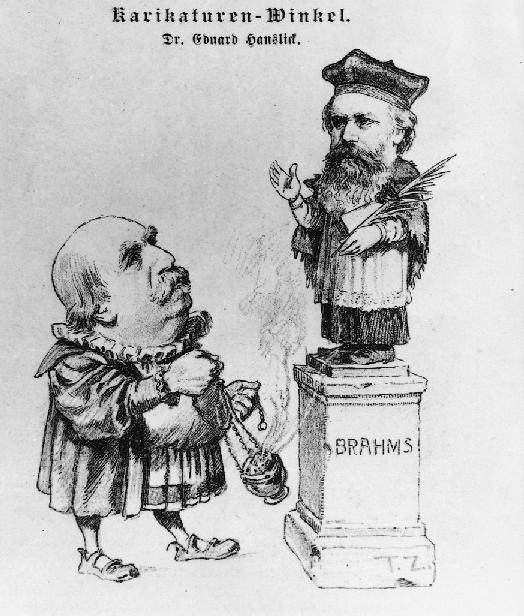
Music director Nicholas McGegan prefaced the concert with a few words about the attempts at the historical accuracy on display... All very interesting, but the real test came in performance. And nothing affirmed the power of this approach like the splendid performance of the Serenade No. 1 in D that occupied the first half of the program... Avoiding the sleek, sometimes impersonal quality that can often seep into modern renditions, [McGegan] embraced every opportunity to give the music a musky physicality - especially in the outer movements, whose rhythmic force was arresting.
However, Rich Scheinen wrote:
Were Johannes Brahms alive to coach today's players, what instructions would he give them? How would he want his music to sound? Not the way it sounded Thursday, when conductor Nicholas McGegan and the Philharmonia Baroque Orchestra unveiled their much-ballyhooed all-Brahms program... It was one strange concert, beginning with an almost stupendously inept performance of Brahms' infrequently played Serenade No. 1 in D major... At its base line, the concert was plain uncomfortable... The orchestra sounded like a country band, raucously out of tune, with broadly sliding strings and elephantine mishaps in the winds and horns.
Both Michelle Dulak Thomson and Stephen Smoliar wrote insightful commentary on our little experiment.
However, the purpose of this blog is to ask: What did you think? Post your comments here or on Yelp.com.
Did we do Brahms tribute or detriment?
February 10, 2010
Nic on performing Brahms: Pt. 5
Nic is back for his final post! Want to learn more about performing Brahms on period instruments? Listen to our audio preview, featuring Nic, string player Maria Caswell and host Teddy Wing. Now, here is Nic on orchestra arrangement – you may be surprised to see where your favorite musicians are sitting at our upcoming concerts:
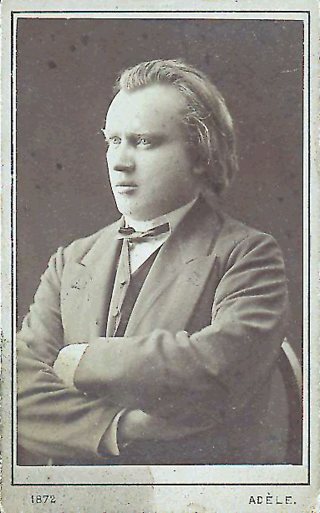 Orchestra size and arrangement –
 In Brahms’ time, as in earlier periods, the size of orchestras varied widely. Brahms himself seems to have preferred intimate halls with relatively small forces. The Meiningen orchestra had 48 members and the orchestra in Karlsruhe, which gave the first performance of the 1st Symphony, had 49 members. The string count was 9 first violins, 9 second violins, 4 violas, 4 cellos, and 4 basses.
Many German orchestras continued to perform concerts standing. In 1893, one of the members of the Leipzig Gewandhaus Orchestra was quoted as saying: “In the Gewandhaus we are wholly different people than in the theatre; in a black dress coat and standing erect at the desk…a different higher spirit dominates us.” The Meiningen orchestra under von Bülow (with the young Richard Strauss as his assistant) also played standing. The orchestra will probably sit, since we’ll be playing a substantial concerto, but it might be interesting to try it out.
Georg Henschel, when he took charge of the newly founded Boston Symphony in 1881, sent Brahms a couple of seating plans for his approval. Here is the one the composer favoured, the one the orchestra will be giving a try:

Thank you for reading, I hope that you will enjoy our concerts. For further reading, I recommend the following books:
- Brown, Clive. 1999. Classical and Romantic Performance Practice 1750-1900. Oxford University Press.
- Haynes, Bruce. 2002. A History of Performing Pitch (The Story of “A”). Scarecrow Press.
- Lawson, Colin, and Robin Stowell. 1999. The Historical Performance of Music, an Introduction. Cambridge University Press.
- Musgrave, Michael, and Bernard D. Sherman. 2003. Performing Brahms. Cambridge University Press.
February 9, 2010
Announcing 2010-11 – Our 30th Anniversary Season
Today, we announced our 30th Anniversary Season!
Current subscribers can renew their subscriptions now! General public subscriptions go on sale March 15th! Single tickets go on sale August 5th. Keep checking our website, more information will be up in the coming weeks. If you can't wait... you can always join us this weekend for Brahms (just in time for Valentine's)!

Philharmonia Baroque Orchestra and Chorale's
2010-11 Season
* – Philharmonia Baroque premiere
† – Philharmonia Baroque debut
Friday 24 September Herbst Theatre, San Francisco
Saturday 25 September First Congregational Church, Berkeley
Sunday 26 September First Congregational Church, Berkeley
Tuesday 28 September Menlo-Atherton Performing Arts Center, Atherton
Wednesday 29 September Lesher Center for the Arts, Walnut Creek
Nicholas McGegan, conductor
Robert Levin, fortepiano (below)
MOZART
Incidental Music from Thamos, King of Egypt *
Concerto for Fortepiano No. 20 in D minor, K. 466 *
Fragments of newly found works for Fortepiano and Orchestra (U.S. Premiere)
Symphony No. 41 in C major, KV 551 “Jupiter” (Last performed by Philharmonia Baroque on March 2001)

October – Bach’s Wedding Cantata
Friday 15 October Herbst Theatre, San Francisco
Saturday 16 October First Congregational Church, Berkeley
Sunday 17 October First Congregational Church, Berkeley
Tuesday 19 October Menlo-Atherton Performing Arts Center, Atherton
Lars Ulrik Mortensen, conductor and harpsichord (below) †
Maria Keohane, soprano †
BACH
Orchestral Suite No. 1 in C major, BWV 1066
Concerto for Harpsichord in D minor, BWV 1052
“Weichet nur, betrübte Schatten,” Wedding Cantata, BWV 202 (February 1982 – Philharmonia Baroque’s first public concert)
Concerto for Harpsichord in D major, BWV 1054

November – Vivaldi’s Four Seasons
November – Vivaldi’s Four Seasons
Friday 5 November Herbst Theatre, San Francisco
Saturday 6 November First Congregational Church, Berkeley
Sunday 7 November First Congregational Church, Berkeley
Tuesday 9 November Menlo-Atherton Performing Arts Center, Atherton
Wednesday 10 November Lesher Center for the Arts, Walnut Creek
Nicholas McGegan, conductor
Elizabeth Blumenstock, violin (concertmaster)
VIVALDI The Four Seasons, Op. 8, Nos. 1-4 (March 1991)
CORELLI Concerto Grosso Op. 6, No. 11 in B-flat major
PERGOLESI Sinfonia in F major *
DURANTE Concerto No. 5 in A major *
ZAVATERI Concerto decimo a Pastorale, Op. 1 *

December – Handel’s Messiah
Friday 3 December Herbst Theatre, San Francisco
Saturday 4 December First Congregational Church, Berkeley
Sunday 5 December First Congregational Church, Berkeley
Tuesday 7 December Menlo-Atherton Performing Arts Center, Atherton
Nicholas McGegan, conductor
Daniel Taylor, countertenor
John McVeigh, tenor
Tyler Duncan, bass †
Philharmonia Chorale, Bruce Lamott, director
TBA soprano
HANDEL Messiah (December 2002)

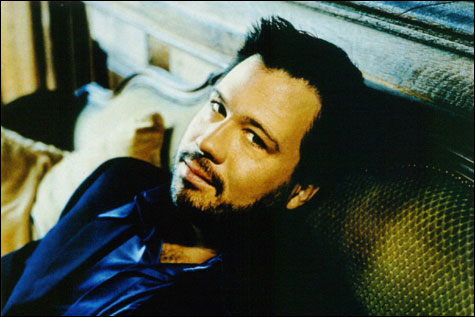
January – David Daniels

January – David Daniels
Saturday 15 January First Congregational Church, Berkeley
Sunday 16 January First Congregational Church, Berkeley
Tuesday 18 January Menlo-Atherton Performing Arts Center, Atherton
Friday 21 January Herbst Theatre, San Francisco
Nicholas McGegan, conductor
David Daniels, countertenor (below)
VIVALDI Stabat mater, RV 621 *
HANDEL Arias from Giulio Cesare
TELEMANN Suite in F major, TWV 55:F11 “Alster Overture” *
February – Hummel’s Concerto for Keyed Trumpet
Friday 11 February Herbst Theatre, San Francisco
Saturday 12 February First Congregational Church, Berkeley
Sunday 13 February First Congregational Church, Berkeley
Tuesday 15 February Menlo-Atherton Performing Arts Center, Atherton
Nicholas McGegan, conductor
Gabriele Cassone, keyed trumpet (below)†
SPOHR Symphony No. 2 in D minor, Op. 49 *
HUMMEL Concerto for Keyed Trumpet in E major *
MENDELSSOHN Symphony No. 1 in C minor, Op. 11 *

March – Flicka!
Friday 4 March Herbst Theatre, San Francisco
Saturday 5 March First Congregational Church, Berkeley
Sunday 6 March First Congregational Church, Berkeley
Tuesday 8 March Menlo-Atherton Performing Arts Center, Atherton
Wednesday 9 March Lesher Center for the Arts, Walnut Creek
Nicholas McGegan, conductor
Frederica von Stade, mezzo-soprano (below)†
REBEL Les Caractères de la danse *
Nathaniel STOOKEY Into the Bright Lights (poetry by Flicka) (U.S. Premiere)
RAMEAU Les Indes galantes suite d’orchestre
GLUCK Arias

April – Haydn’s Creation
Friday 8 April Herbst Theatre, San Francisco
Saturday 9 April First Congregational Church, Berkeley
Sunday 10 April First Congregational Church, Berkeley
Tuesday 12 April Menlo-Atherton Performing Arts Center, Atherton
Wednesday 13 April Lesher Center for the Arts, Walnut Creek
Nicholas McGegan, conductor
Dominique Labelle, soprano
Thomas Cooley, tenor
Philharmonia Chorale, Bruce Lamott, director
HAYDN The Creation (April 1994)

Celebrating 30 Years of Inspired Sound
When Philharmonia Baroque Orchestra of the West played the first notes of Johann Sebastian Bach’s Wedding Cantata at Herbst Theatre on February 4, 1982, no one guessed what the future would hold. At the time, just having formed the first period instrument ensemble on the West Coast was a feat in itself. By the mid-1970s, a small community of musicians and craftsmen had converged on the Bay Area, all inspired by a countercultural phenomenon: the early music movement. It was not until a fateful moment in 1977 that the true power of this rediscovered period of music was realized at a summer camp on the Russian River—a roomful of these musicians played together as an ensemble, on period instruments, for the very first time. They produced a sound so full of life, expression, exuberance, clarity and subtlety that it seemed to vibrate from the hearts and minds of the composers.
The moment was so moving, so unique, that one musician—Laurette Goldberg—became obsessed with creating an orchestra that would be able to recreate the richness, brilliance, flexibility and articulation that the composers of the Baroque and early Classical periods intended. Laurette spent five years bringing together a group of people who would support the musicians who became Philharmonia Baroque. At thetime, her ideas were radical—a chamber orchestra, Baroque and early-Classical repertoire, period instruments, but her desire was not—to create something meaningful, affecting, transcendent.
Since the very beginning, Philharmonia Baroque has been about the love of a sound—a sound, once heard, that changes once and for all the way we want to experience music, whether on stage or in the audience. This inspiration has guided Philharmonia Baroque from the start, and the organization’s ultimate goal has remained constant since its inception 30 years ago: we want our music to delight, to inspire and to educate—to increase the level of beauty, sensitivity and joy in a complex world.
We hope to see you this season and next!
Subscribe to:
Posts (Atom)


 Posts
Posts


